
Infrastructure for AI
in the physical world.
Connect compute, data and runtime operations so robotics teams can move intelligent systems from lab integration to real deployment.
Discuss your deploymentA deployment needs more than a capable model.
Compute
Place workloads where they belong.
Inference
Bring model runtimes to the edge.
Data
Turn field signals into usable evidence.
Operations
Make every deployment observable.
THE INFRASTRUCTURE LAYER
Intelligence needs a place to run.
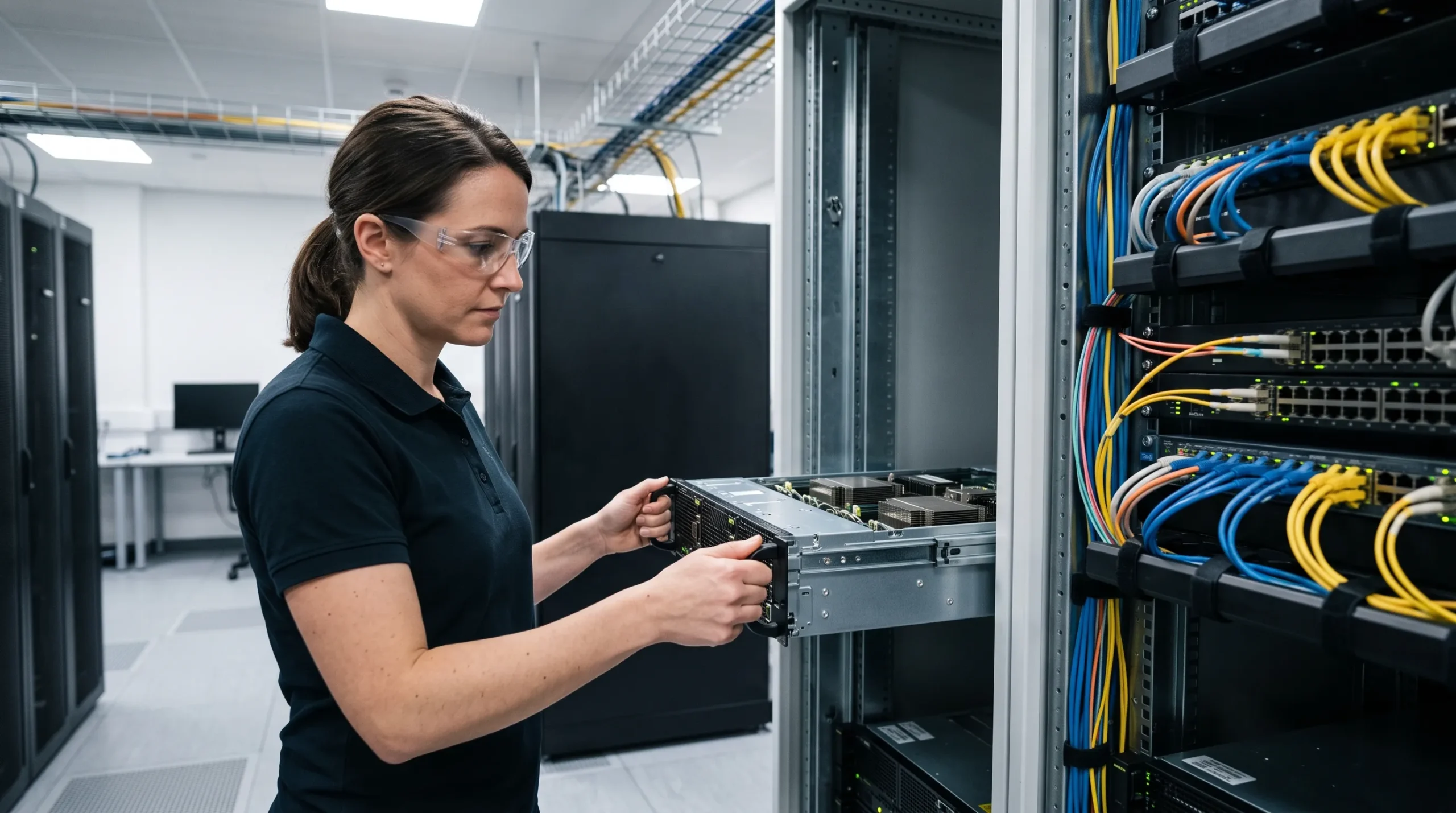
A robot has to process sensor input, run inference, move data and recover from failure. Those workloads span devices, networks and compute environments.
IFUTUR brings those interfaces into one project architecture, with clear deployment boundaries and an operating plan.
One connected operating stack.
A reference architecture shaped around the robot, the environment and the people responsible for operating it.
Models & workloads
Perception, planning, agent reasoning and evaluation
Compute placement
Cloud, on-premises and edge resources matched to workload constraints
Data & integration
Sensor streams, event capture, model releases and robot adapters
Runtime operations
Health signals, access controls, operator escalation and audit trails
What IFUTUR connects.
Project-scoped integration across the layers that make physical AI deployable.
Compute architecture
Start with workload requirements. Map training, evaluation, simulation and inference to the right compute environment.
Deliverables: workload map, placement decisions, sizing assumptions and deployment topology.
Explore compute architectureEdge inference integration
Package model runtimes for target devices. Define profiling, release checks and rollback before systems leave the lab.
Deliverables: runtime package, device integration plan, release checklist and rollback procedure.
Explore edge inference integrationData & evaluation pipelines
Connect sensor and event capture to useful datasets. Define provenance, retention and scenario replay so field evidence can inform the next release.
Deliverables: data-flow map, dataset structure, retention policy and evaluation workflow.
Explore data & evaluation pipelinesRuntime operations integration
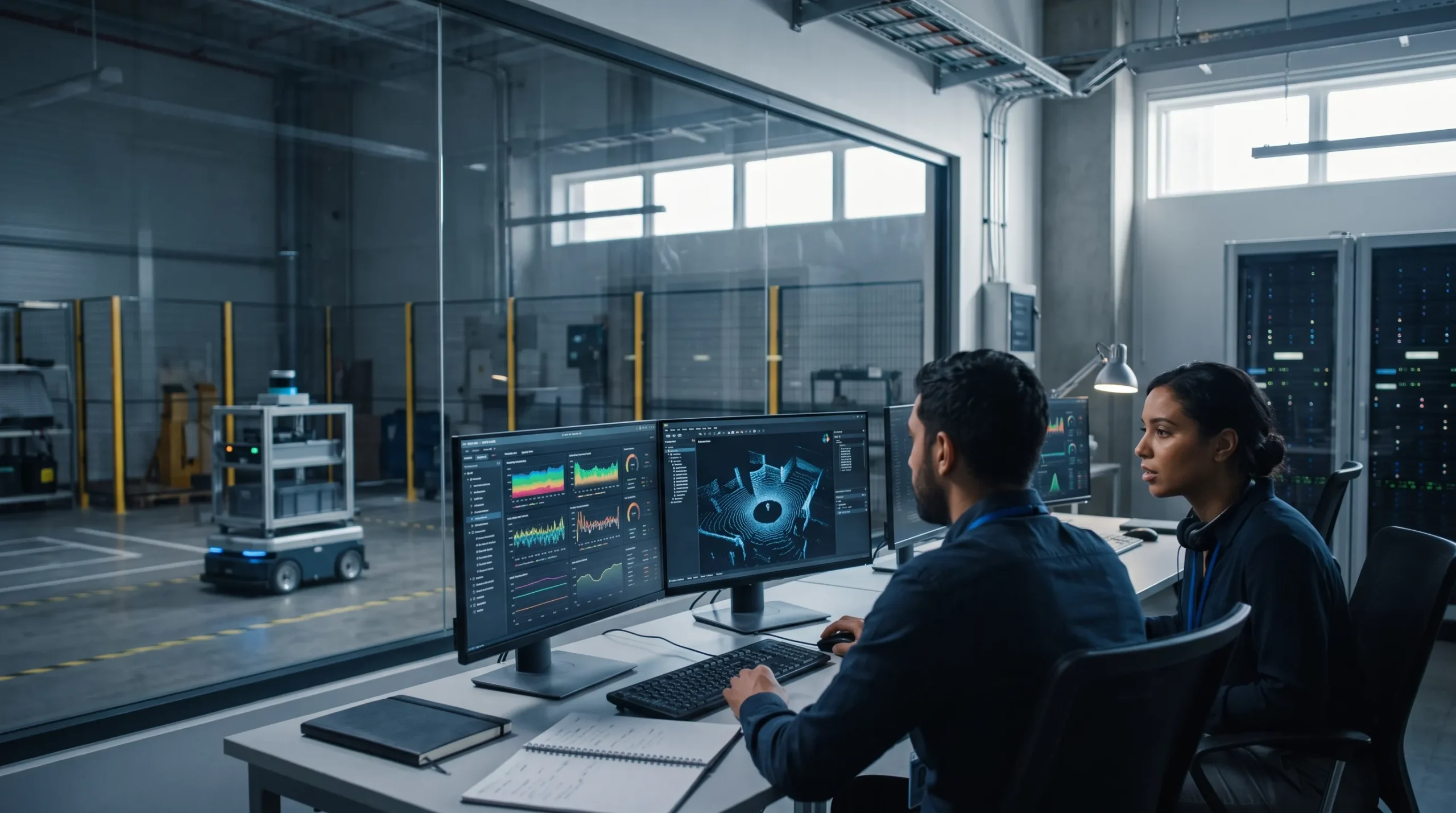
Bring health signals and operator actions into a consistent operating model. Define permissions, escalation paths and the boundaries of remote intervention.
Deliverables: telemetry schema, alert routing, access model and operator runbook.
Explore runtime operations integrationThe connections matter.
Compute, data, edge inference and operations form a shared integration problem. This original diagram shows the relationships, not a live product interface.
APPLICATION SCENARIOS
Different machines. Shared infrastructure needs.
Illustrative applications for the service areas above. These are not customer deployments.
Mobile inspection
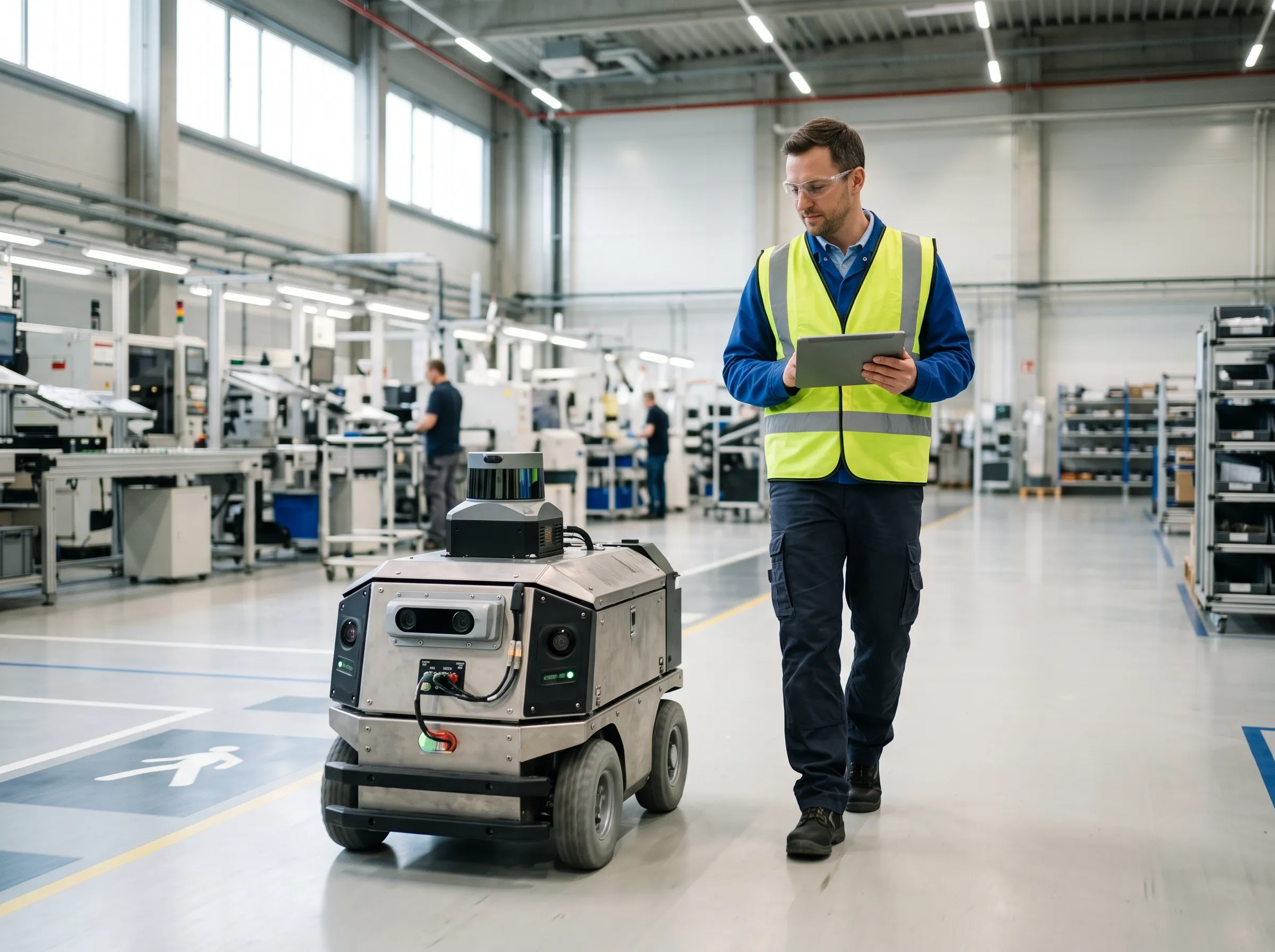
Connect onboard perception, inspection events and operator review for machines working in industrial environments.
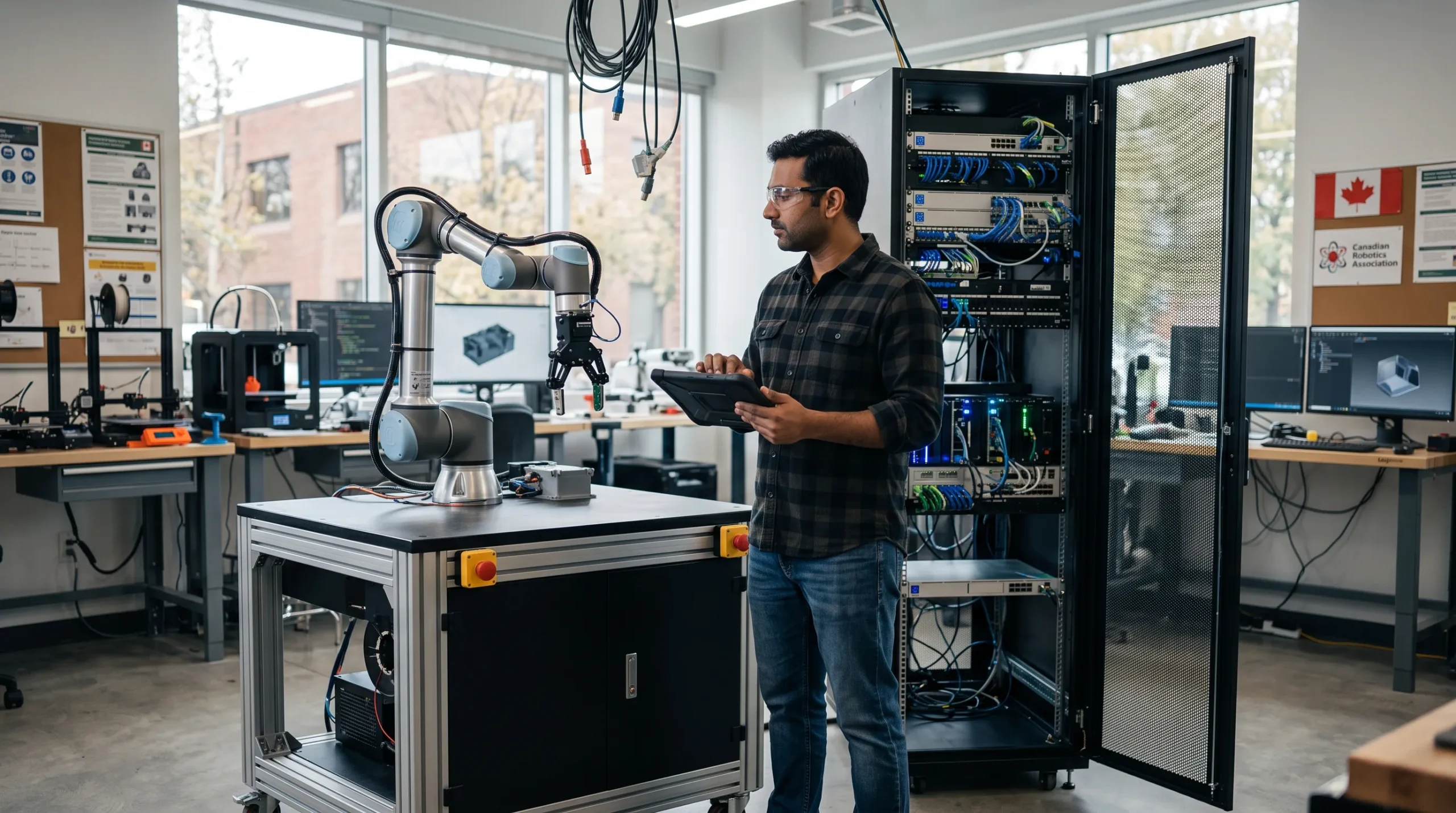
Industrial manipulation
Integrate model inference, hardware interfaces and event capture around repeatable handling and assembly tasks.
AI computing center architecture
Plan shared infrastructure for model development, simulation and evaluation, with resource placement and data movement made explicit.
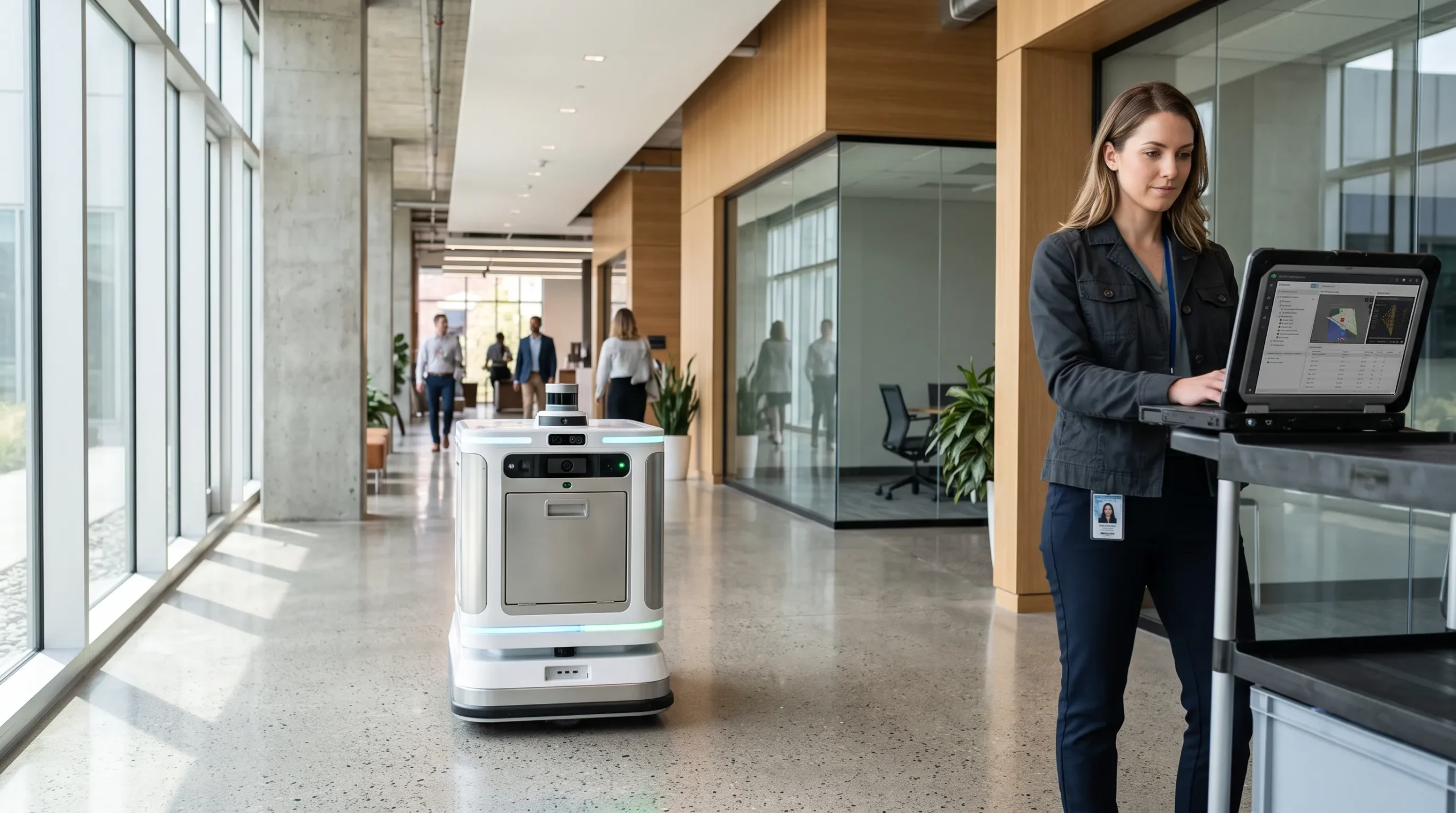
Embodied-agent deployment
Define how agent decisions connect to robot interfaces, permission boundaries and human escalation without bypassing approved control systems.
A clear path from requirements to operation.
Each engagement starts with a defined scope. The output is an integration that can be understood, tested and handed over.
Scope
Review the robot stack, workload, environment and success criteria.
Architect
Define interfaces, compute placement, data flow and operating boundaries.
Integrate
Connect runtimes and deployment pipelines in a controlled test environment.
Validate & hand over
Exercise failure paths, document acceptance checks and hand over the operating runbook.
Questions before deployment.
What is physical-AI infrastructure?
It is the compute, data and runtime integration that supports AI-enabled machines. IFUTUR focuses on the interfaces between these layers, with the scope defined for each project.
Do you provide GPU capacity or a hosted data center?
This service page describes architecture and integration work. It does not offer published GPU rental capacity, a live cloud console or a data-center service-level agreement.
Can the project use our existing robot and compute stack?
The starting point is your existing hardware, interfaces and workload. Compatibility and integration scope are assessed before a delivery plan is agreed.
How is edge inference addressed?
The integration plan considers device resources, runtime packaging, model release checks and rollback. Latency requirements are measured within the project environment, not assumed from generic benchmarks.
How are operator controls and safety boundaries handled?
Operator permissions, escalation and action records are part of the operating model. Safety-critical control remains within the robot’s approved architecture; remote tooling does not replace it.
What should we bring to the first discussion?
Share the application, robot or agent stack, current compute environment, target deployment setting and the main integration constraint. Avoid sending credentials or confidential datasets through the contact form.
Let’s connect your deployment.
Tell us what the system needs to do, where it has to run and which integration is holding it back.
Useful context: robot or agent stack, compute environment, sensor/data interfaces, deployment setting and acceptance criteria.
Please do not include passwords, API keys or confidential datasets.